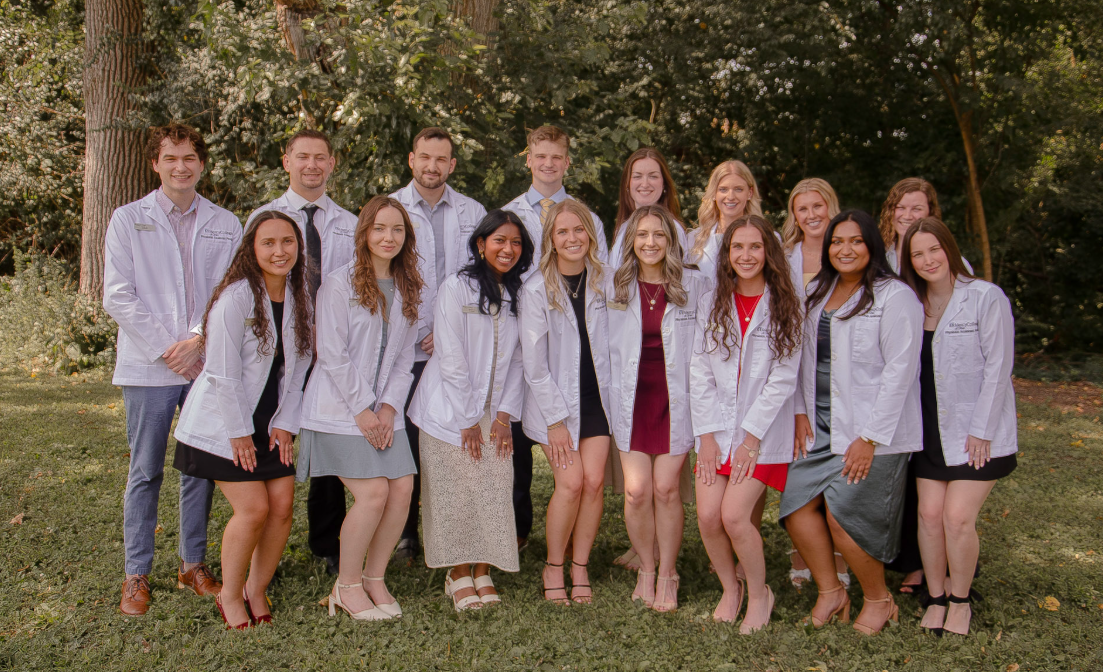
Doctor of Nursing Practice-Nurse Anesthesia
Program Overview
The Doctor of Nursing Practice with a concentration in Nurse Anesthesia Program (DNP-NAP) prepares advanced practice registered nurses to deliver safe, compassionate, high-quality anesthesia care across the full spectrum of clinical settings. At the core of our DNP-Nurse Anesthesia Program is a simple but profound belief: exceptional anesthesia care begins with exceptional human care. We prepare graduates who are not only clinically excellent, but who bring compassion, presence, and purpose to every patient encounter, every clinical decision, and every moment of their professional lives.
The DNP-NAP is a terminal clinical doctorate in nursing and the foundation upon which our graduates build purposeful careers. Graduates emerge as Certified Registered Nurse Anesthetists (CRNAs) equipped with high-level clinical expertise across the life span, a bold preparation for healthcare leadership, and the knowledge and skills to implement evidence-based practice and quality improvement initiatives that advance patient care, strengthen health systems, and transform healthcare delivery.
The DNP-NAP is a hybrid program, including weekly in-person simulation and skills lab sessions, which is grounded in evidence-based educational practice. Research consistently supports repetitive, deliberate simulation training as a powerful method for building clinical confidence, reinforcing anesthesia principles, and preparing students to enter the clinical environment with competence and composure. Each session is intentionally designed to mirror real anesthesia workflows, so students develop the rhythm, decision-making patterns, and muscle memory they will rely on from their very first clinical day.
Accreditation Information
Mercy College of Ohio is currently under review for initial accreditation by the Council on Accreditation of Nurse Anesthesia Educational Programs (COA).
No students may be enrolled in the program until initial accreditation is granted. A decision on accreditation is anticipated at the COA’s June 2027 meeting.
COA Contact Information:
10275 W. Higgins Rd., Suite 906
Rosemont, IL 60018-5603
224-275-9130
coacrna.org
| Doctor of Nursing Practice (DNP) with a concentration in Nurse Anesthesia Program (NAP) | ||
Year 1 |
||
| Fall Semester | Spring Semester | Summer Semester |
| *NUR 700 Nursing Leadership in Complex Healthcare Systems (3) | *NUR 704 Health Policy and Finance (3) | NAP 770 Advanced Human Anatomy, Physiology and Pathophysiology with Anesthesia Considerations in Coexiting Diseases Part I (4) |
| *NUR 702 Theoretical Foundations for Advanced Nursing Practice (3) | NUR 754 Advanced Health Assessment and Diagnostic Analysis (3) | NAP 741 Advanced Pharmacology II for Nurse Anesthetists (3) |
| *NUR 730 Advanced Physiology and Pathophysiology (3) | NAP 740 Advanced Pharmacology I For Nurse Anesthetists (3) | NAP 761 Principles & Practice of Nurse Anesthesia II with Lab Component (4) |
| *NUR 735 Advanced Pharmacology (3) | NAP 760 Principles & Practice of Nurse Anesthesia I with Lab Component (4) | NAP 780 Nurse Anesthesia Clinical Residency Transition (3) |
| *NAP 750 Biochemistry and Physics for Nurse Anesthetists (2) | ||
| Total Credits: 14 | Total Credits: 13 | Total Credits: 14 |
Year 2 |
||
| Fall Semester | Spring Semester | Summer Semester |
| *NUR 706 Evidence Based Practice and Quality Improvement for Advanced Nursing Professions (4) | *NUR 708 Informatics and Healthcare Systems Improvement (3) | *NUR 720 DNP Project I: Proposal and Design (3) |
| NAP 771 Advanced Human Anatomy, Physiology and Pathophysiology with Anesthesia Considerations in Coexisting Diseases Part II (4) | NAP 772 Regional Anesthesia Principles & Practice for Nurse Anesthetists (2) | *NUR 710 Population Health and Epidemiologic Approaches (3) |
| NAP 762 Principles & Practice of Nurse Anesthesia III with Lab Component (4) | NAP 763 Principles & Practice of Nurse Anesthesia IV with Lab Component (3) | NAP 783 Nurse Anesthesia Clinical Residency III (5) |
| NUR 781 Nurse Anesthesia Clinical Residency I (2) | NAP 782 Nurse Anesthesia Clinical Residency II (3) | |
| Total Credits: 14 | Total Credits: 11 | Total Credits: 11 |
Year 3 |
||
| Fall Semester | Spring Semester | Summer Semester |
| *NUR 721 DNP Project II: Implementation (3) | *NUR 722 DNP Project III: Dissemination (2) | NAP 786 Nurse Anesthesia Residency VI (4) |
| NAP 776 Professional Aspects for Nurse Anesthetists (3) | NAP 778 Crisis Management in Anesthesia with Lab Component (3) | NAP 790 Anesthesia Concepts Implementation (4) |
| NAP 784 Nurse Anesthesia Clinical Residency IV (5) | NAP 785 Nurse Anesthesia Clinical Residency V (4) | |
| Total Credits: 11 | Total Credits: 9 | Total Credits: 8 |
| Total Credit Hours: 105 | ||
| * Online courses | ||
Admission requirements for the DNP-NAP include:
1. Bachelor of Science in Nursing (BSN) or Master of Science in Nursing (MSN) from a regionally accredited institution with program accreditation by the Commission on Collegiate Nursing Education (CCNE) or the Accreditation Commission for Education in Nursing (ACEN).
2. Candidates must hold a current, unencumbered Registered Nurse (RN) license in one of the 50 United States or U.S. Territories and must be a U.S. citizen or permanent U.S. resident. All nursing licenses, whether active or inactive, must be unencumbered; candidates with encumbered licenses are not eligible for admission. Licensure will be verified through Nursys or the verification system of the applicable state board of nursing.
3. Candidates with international transcripts must submit official translations and evaluations from a NACES-member credential evaluation service. Additionally, candidates whose primary language is not English must demonstrate proficiency in reading, writing, speaking, and listening by submitting qualifying scores from one of the following accepted exams. Candidates should have test scores sent from the testing agency directly to Graduate Enrollment Manager at graduateadmissions@mercycollege.edu. Accepted English language tests and scores:
- TOEFL: 550 (paper-based), 213 (computer-based), or 80 (internet-based)
- IELTS: 7.0 or higher
- Duolingo English Test: 120 or higher
- Gateway English: 475 or higher
4. Candidates must hold current American Heart Association (AHA) certifications in ACLS, BLS, PALS, and CCRN preferentially at the time of application to the DNP-NAP. If not, and the candidate is offered a seat in the program, the requirements must be completed prior to program matriculation.
5. Undergraduate cumulative Nursing GPA must be a minimum 3.0 on a 4.0 scale.
6. Undergraduate science GPA must be minimum 3.0 on a 4.0 scale.
7. The following prerequisites must be completed with a B or better in the following courses within the last 10 years:
- Anatomy and Physiology 1 and 2 or a combination course of Anatomy and Physiology 1 and 2.
- Minimum one Chemistry course (Examples: Biochemistry, General Chem 1 and 2, Organic) with or without lab is accepted.
8. A Graduate Statistics course is strongly preferred at the time of application. Candidates offered a seat in the program who have not yet completed this requirement must do so with a grade of B or better prior to matriculation.
9. One year minimum full-time of intensive care experience (ICU) (within the last two years) or it’s part-time equivalent (2080 hours) as a professional registered nurse in a critical care area in the United States, its territories or a U.S. military hospital abroad, and must be completed prior to the application deadline.
- The critical care area should have emphasis placed on the following: invasive hemodynamic monitoring, ventilatory care and pharmacologic management. The following are preferred ICU areas: Surgical Intensive Care (SICU), Medical Intensive Care (MICU), Cardiovascular Intensive Care (CVICU), Cardiac Intensive Care (CICU), Pediatric or Neonatal Intensive Care (PICU/NICU). Additionally, experience in the Emergency Department (ED) has proven satisfactory provided the candidate has achieved experience with managing unstable patients, invasive monitoring, ventilators, and critical care pharmacology that could be attained in a level 1 or 2 trauma designated facility caring for complex patient conditions.
- Candidates, please complete a Practice Survey Form.
10. Candidates must shadow a CRNA or an anesthesiologist a minimum of 16-hours within one year of program application. One of the shadow experiences must be completed with a CRNA. Please submit a Mercy College CRNA or anesthesiologist Shadow Verification Form after completing this step.
11. Three professional letters of recommendation utilizing the Mercy College recommender form:
- One recommender must be from a current employer or supervisor who can confirm ICU status as full-time or part-time equivalent (2080 hours) and performs the candidate’s evaluation.
- The additional two letters of recommendation must be from healthcare providers who work with the candidate. Letters may be from the following:
Nurse Practitioner
Physician Assistant
Physician
Former supervisor from previous employment
Former faculty at your nursing program
12. Submit a current resume or curriculum vitae.
13. Candidates are selected for interviews based on a holistic review of their application and supporting documents performed by the DNP-NAP Committee. Not all qualified candidates are offered an interview with the DNP-NAP.
14. Additional Information regarding the DNP-NAP at Mercy College:
The Graduate Record Examination (GRE) is not required.
The DNP-NAP Committee takes other certifications and achievements into consideration during application review such as:
- Trauma Nursing Core Courses (TNCC)
- Stoke Certification
- Continuous Renal Replacement Therapy (CRRT)
- IV Ultrasound
- Extracorporeal Life Support Organization (ECMO Specialist)
- A personal statement is not required. A writing sample will be completed by candidates, if selected for an interview, as part of the interview process.
The DNP-NAP may accept up to six transfer credits, subject to review and approval by the Program Director on a case-by-case basis.
Transcripts for all Colleges and Universities attended must be submitted.
Prior to the Start of the Program:
If offered a seat in the program, the candidate’s seat is contingent upon:
- Completing all program admission requirements.
- An unencumbered, active Ohio nursing license unless you already have an RN license for Ohio. The Ohio RN license must be obtained and submitted to the program prior to program matriculation.
- The candidate must submit proof that all nursing licenses, whether inactive or current, are unencumbered. Candidates with encumbered nursing licenses will not be considered eligible for the DNP-NAP.
- A successful criminal background check.
- Successfully passing the health and drug screen tests.
- Successfully passing all other required background checks.
- Submission of up-to-date immunizations.
- Documentation of clearances required by programs affiliation agreements such as: Office of Inspector General, National Sex Offender Registry, etc.
- Seat fee payment of $1,000.00 within 10 business days of acceptance to DNP-NAP. This amount will be applied to the first semester’s tuition.
- Remain in the critical care area maintaining bedside patient care until matriculation into the Program.
Program Outcomes and Statistics
The Mercy College of Ohio DNP-NAP reports the following performance outcomes:
| Graduation Year | Overall NCE Pass Rate for Graduation Year | First-Time NCE Pass Rate | NCE Pass Rate Within Six Months | Attrition Rate | Percent Employed Within Six Months of Completion | |||||
| 2030 | PENDING | PENDING | PENDING | PENDING | PENDING | |||||
| 2031 | PENDING | PENDING | PENDING | PENDING | PENDING | |||||
| 2032 | PENDING | PENDING | PENDING | PENDING | PENDING | |||||
| 2033 | PENDING | PENDING | PENDING | PENDING | PENDING | |||||
| 2034 | PENDING | PENDING | PENDING | PENDING | PENDING |
-

Small class sizes foster close mentorship and individualized instruction
-

Extensive and diverse clinical experiences at affiliates, including Bon Secours Mercy Health, Nationwide Children's Hospital, and other leading healthcare facilities. Click to see list of approved clinical sites.
-

Weekly in-person simulation builds clinical confidence and real-world readiness from day one
-

Emotional intelligence workshops and a holistic culture support well-being alongside academic growth
Elevate Your Career
A Profession in High Demand
According to the U.S. Bureau of Labor Statistics, CRNAs are among the most sought-after advanced practice providers in the country. Overall employment of nurse anesthetists is projected to grow 35% from 2024 to 2034, much faster than the average for all occupations, with approximately 32,700 openings projected each year across the decade. Multiple forces are driving this growth: an aging population that requires more surgeries, advances in outpatient surgical procedures, and the retirement of many current anesthesia professionals.
Ohio is an active market for CRNA employment, with demand spread across urban health systems, community hospitals, and rural critical access facilities throughout the state. More than 1,200 CRNAs are currently licensed to practice in Ohio. Ohio's mix of urban, suburban, and rural communities also means graduates have the flexibility to choose the type of practice environment that fits their professional goals and lifestyle.
With healthcare demand continuing to rise statewide and a national shortage of anesthesia providers deepening, Ohio CRNAs are well-positioned for long-term career stability and growth.
Collaborative Practice and Scholarly Impact
Students gain hands-on experience collaborating within surgical and perioperative care teams across a variety of clinical settings, working alongside undergraduate nursing, radiology, and physician assistant students. Through these interprofessional experiences, students build essential communication skills, foster mutual respect, and develop a team-based mindset — qualities that define exceptional, patient-centered care.
In addition, each student completes a DNP Scholarly Project, a culminating experience that challenges them to design and implement a meaningful, practice-changing initiative rooted in their own clinical passions and professional values. This project empowers students to translate their expertise into real-world impact, strengthening both their clinical voice and their leadership as future nurse anesthetists.
Frequently Asked Questions (FAQs)
The DNP-NAP takes 36 months, or three years, to complete. The program is offered as full-time only. There is no part-time track.
Due to the rigorous academics, time-intensive studies, and clinical residency dedication of this program, employment of any kind is strongly discouraged.
The Mercy College of Ohio DNP-NAP is a hybrid model. All DNP courses are completed online and are either synchronous or asynchronous. The nurse anesthesia courses are held in person, on campus.
Yes. The programs curriculum is constructed to prepare the student nurse anesthesia resident (SRNA) with a strong foundation to sit for the NCE.
Clinical residency rotations are currently located in the state of Ohio and Michigan. Clinical residency rotations will offer extensive opportunities in various practice models, including pediatrics, regional anesthesia, and independent CRNA practice settings. There are currently 15 approved clinical sites.
Yes. Both simulation and hands-on skills practice are built into the nurse anesthesia curriculum. This environment supports learning and confidence in a simulated environment.
Please review the Requirements Tab.
One year minimum full-time of intensive care experience (ICU) completed within the last two years or it’s part-time equivalent (2080 hours) as a professional registered nurse in a critical care area in the United States and must be completed prior to the application deadline.
The critical care area should have emphasis placed on the following: invasive hemodynamic monitoring, ventilatory care, and pharmacologic management. The following are preferred ICU areas:
Surgical Intensive Care (SICU) Medical Intensive Care (MICU)
Cardiovascular Intensive Care (CVICU) Cardiac Intensive Care (CICU)
Pediatric Intensive Care (PICU) Neonatal Instensive (NICU)
Neurological Intensive Care (NICU)
Additionally, experience in the Emergency Department (ED) has proven satisfactory provided the candidate has achieved experience with managing unstable patients, invasive monitoring, ventilators, and critical care pharmacology that could be attained in a level 1 or 2 trauma designated facility caring for complex patient conditions.
Yes. Candidates with International Transcripts must provide official translations and evaluations of all transcripts or educational credentials. Mercy College of Ohio accepts translations and evaluations from a company that’s a member of NACES (National Association of Credential Evaluation Services).
The DNP-NAP admissions team will review both your nursing GPA and your science GPA. Candidates must have a minimum 3.0 nursing and science GPA.
Anatomy & Physiology 1 & 2
Chemistry 1 and Chemistry 2
Organic Chemistry
Inorganic Chemistry
Biochemistry
Graduate Statistics
Graduate Pharmacology
Graduate Physiology
Pathophysiology
The program requires completion of Anatomy & Physiology 1 & 2 and a Chemistry course for interview consideration for the program. The accepted science courses must be a B or better. If below a B, courses must be retaken to achieve this requirement.
If your science courses are more than 10 years old from the time a candidate applies, required courses must be repeated.
No. The GRE is not required for the program.
No. With permission from the Program Director, candidates must have all three certifications completed and submitted to your file one month prior to the start of the program if accepted into the program. The CCRN certification requires that you pass this certification for program matriculation.
Currently the program requires that a candidate pass the CCRN. No score is required.
No. If selected for an interview, candidates will provide a writing sample during the interview process.
A minimum of 16 hours is required as part of the admission requirement. The average candidate shadows 40 hours. Shadow experiences must be completed within six months prior to submitting the application. Additionally, there is a shadow form that must be completed and submitted with a candidate’s application.
Candidates need three letters of recommendation for application. Please see the accepted professional letters of recommendation:
a. One recommender must be from a current employer or supervisor who can confirm ICU status as full-time (for one year minimum within the past two years) or part-time equivalent (2080 hours) and perform the candidate’s evaluation.
b. The additional two letters of recommendation must be from healthcare providers who work with the candidate. This can be the following:
- Nurse Practitioner
- Physician Assistant
- Physician
- Former supervisor from previous employment
- Former faculty at your nursing program
No. There is no application fee.
Yes. If accepted into the Nurse Anesthesia Program, a non-refundable $1,000.00 seat fee is due 10 business days after accepting your seat. This seat fee is applied to the first semester’s tuition.
For a candidate on the waitlist for selection, there is no seat fee required.
If a candidate is selected from the waitlist; the seat fee due date will be decided on an individual basis and based on when the candidate is accepted into the cohort and range anywhere from immediately up to 10 business days.
Yes. Applications will open in November 2026. Applications for the inaugural cohort will close June 2027.
Applications will open August 2, 2027, and close December 1, 2027.
Once a candidate’s application is received and checked for completion, there is a review process by both Graduate Admissions and by the DNP-NAP Committee. Please expect 4 to 5 weeks before receiving an invite to interview with the program.
Once a candidate’s application is received and checked for completion, there is a review process by both Graduate Admissions and by the DNP-NAP Committee. Please expect 4 to 5 weeks before receiving a response to your application. Candidates who are not selected for an interview will be contacted via email.
Yes. If an applicant is denied an interview, the applicant may apply again next interview cycle.
Yes. Candidates may apply again for the next interview cycle.
Yes. For those who withdrew or were dismissed from a previous nurse anesthesia program are welcome to apply. The program requires (no exceptions) the following for application consideration:
a. Submit a letter of good standing on previous program letterhead, from their previous Program Director with their handwritten dated signature.
b. The letter must be sent from the previous Program Director directly to the DNP-NAP Program Director at Mercy College of Ohio: Dr. Dawn AuBuchon, CRNA, FAANA @ Dawn.AuBuchon@mercycollege.edu.
c. Upon receipt of the required documentation, a determination will be made on a case-by-case basis, and the candidate will be notified of a decision by email.
*If the previous program director is no longer there, the current program director will be required to send the letter to Dr. AuBuchon.
The program director and the assistant program director welcome questions and will meet with potential registered nurses interested in the program. Below includes additional contacts for the DNP-NAP that may answer questions.
Program Director, Dr. Dawn AuBuchon, CRNA, FAANA: Dawn.AuBuchon@mercycollege.edu
Assistant Program Director, Dr. Chadley Brunk, CRNA: Chad.Brunk@mercycollege.edu
Academic Coordinator, Gina Duran, MOL: Gina.Duran@mercycollege.edu
Graduate Enrollment Manager
graduateadmissions@mercycollege.edu
Yes. After each interview cycle, the DNP-NAP committee will have a list of candidates who are interviewed for the current cohort (notification will be sent via email).
Candidates not accepted into the program will receive an email from Mercy College DNP-NAP Academic Coordinator once interviews have commenced and the cohort is selected; an email response will be required.
Candidates who are offered a spot on the wait list will be kept updated on this status. If a candidate is not offered a seat for the current cohort, the candidate may apply again at the next application cycle for the program and potentially interview with the DNP-NAP Committee. Candidates on the alternate list are encouraged to stay in contact with the DNP-NAP Program Administration and the DNP-NAP Academic Coordinator.
*Candidates may remain on the alternate list until program matriculation for the current cohort.
Candidates selected for a seat in the program will be notified via phone and emailed with an offer.
The program will select up to 18 students into a cohort for the first three cohorts.
Candidates not accepted into the program will receive an email from Mercy College DNP-NAP
NC-SARA State Authorization Information
-
-
Document .pdfNC-SARA Student Complaint Process
Download
Request More Information
Complete the form below and we will connect you with an admission officer who will reach out with next steps.